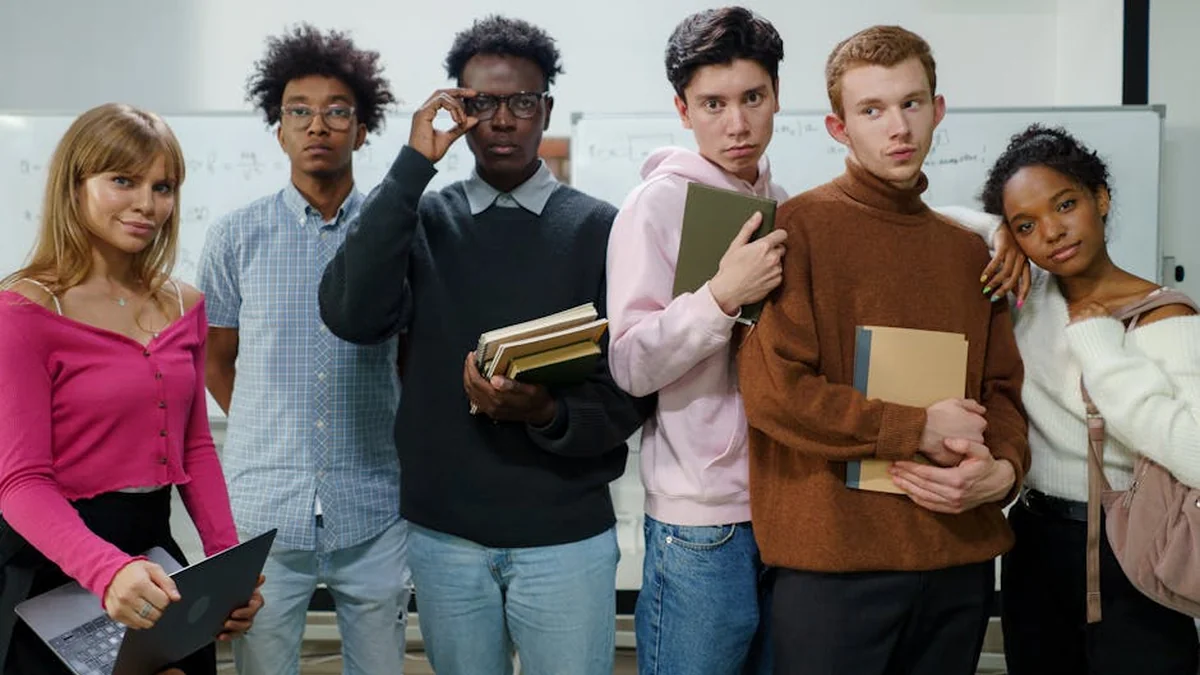
Forty students from over twelve universities, both Bulgarian and international, participated in the final of DisInfoHack 2026 at Sofia University’s GATE Institute on Monday. The students presented analyses of disinformation narratives and proposed strategies to enhance information resilience within Bulgaria. The project, managed by St.
Kliment Ohridski University of Sofia through the GATE Institute, involves collaborations with the European Studies Department, the Faculty of Philosophy, the Faculty of Economics and Business Administration, and partners including the Bulgarian Academy of Sciences, the European Software Institute, and technology firms Webcentric, Contipso, and Identrics. This effort is part of the three-year CoDE (Countering Disinformation Environment) project, which merges research with practical application to equip youth with skills to identify misleading narratives in digital media. Participants focused their work across six key areas: elections, wars, ecology, migration, patriotism, and crises.
At the concluding event, findings were presented, winners were announced, and recommendations for countering disinformation were outlined. Sofia University Rector Prof. Georgi Valchev emphasized the necessity of critical thinking, noting that even accurate information can be misused as disinformation.
Caretaker Innovation and Growth Minister Irena Mladenovasa stressed that combating disinformation requires coordinated efforts across government, academia, and the technology sector to build sustainable skills. Caretaker Foreign Minister Nadezhda Neynsky described disinformation as a threat that erodes trust and weakens democracy, asserting that national security relies on a society’s ability to discern truth. GATE Institute Director Prof.
Sylvia Ilieva highlighted that disinformation is a continuous process, increasingly involving AI-generated content. Officials stressed that institutional cooperation is vital for effective countermeasures. The DisInfoHack model is slated for implementation in Poland later this year, signaling international expansion.
Topics: #final #students #disinformation