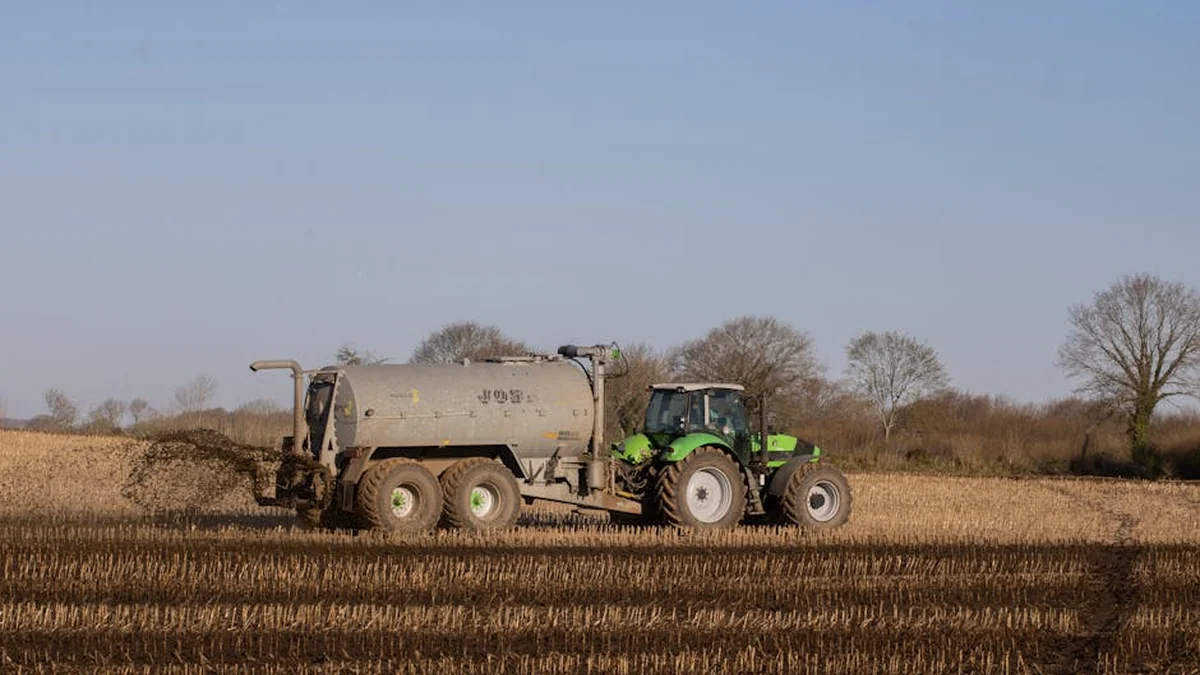
Over 19 tonnes and more than 28,000 litres of agricultural products, including banned plant protection products and fertilizers, were seized from warehouses belonging to a major agricultural holding in Vardim, near Svishtov. The seized materials were found to be banned for use in Bulgaria, lacking required Bulgarian-language labels, or past their expiration dates. Inspectors from the Bulgarian Food Safety Agency (BFSA) examined three storage facilities.
The Agency stated in a press release on Thursday that only one warehouse was officially registered for the wholesale trade of such goods, while the other two operated without proper regulation. Within the licensed facility, inspectors identified 17.5 tonnes and 510 litres of banned fertilizers lacking Bulgarian labeling, alongside 530 litres of expired fertilizers. This site also held 49 tonnes of sugar beet sugar labeled in Ukrainian.
The unregulated warehouses yielded 10,380 litres and 1.875 tonnes of banned plant protection products without Bulgarian labels, in addition to 16,725 litres of expired substances. Furthermore, 10 tonnes of sugar were seized for violating safety regulations. Expired pesticides and fertilizers are slated for destruction, and all banned imported products will undergo further inspection by relevant authorities.
A final determination regarding the seized sugar has not been issued, though it is expected not to enter the retail market. Multiple state agencies, including the National Police General Directorate and the National Customs Agency, have been notified of the violations. These BFSA inspections are part of Operation SILVER AXE, a coordinated effort involving Europol and the European Anti-Fraud Office to combat the illegal import and distribution of unregistered pesticides and fertilizers across the EU.
Topics: #tonnes #banned #fertilizers


Authorities seized over 19 tonnes and more than 28,000 liters of agricultural products, including fertilizers and plant protection products deemed banned, from the warehouses of a major agricultural h
What specific regulations or procedures allowed for the seizure of these banned agricultural products?