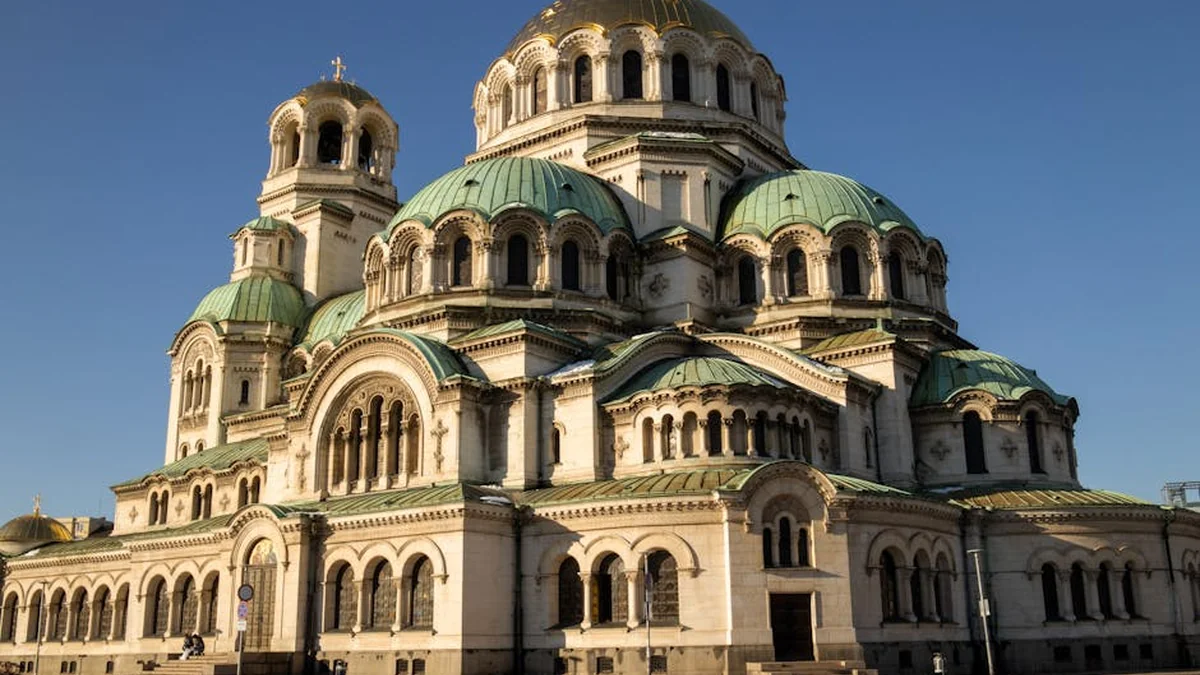
Bulgaria’s modern history is marked by several significant milestones across education, culture, and governance. Early national struggles were evident with the outbreak of the April Uprising in 1876, a period of resistance against Ottoman rule. The development of institutional infrastructure also saw key developments.
In 1859, the first Bulgarian secondary school abroad opens in Bolhrad, Bessarabia (present-day Ukraine). Culturally, the city of Sofia established significant landmarks; the Aleksandrovska Hospital, the first medical treatment facility, opens there in 1879. Furthermore, the Sofia Zoo was established by royal decree in 1888, becoming recognized as the oldest and largest zoo in the Balkans.
In the realm of modern governance, legislative progress was marked in 1991 when the Seventh Grand National Assembly passed the Protection of Competition Act. More recently, the nation noted a significant economic shift in 2013 when a new 5 euro note was introduced into circulation, featuring the designation “euro” written in the Cyrillic alphabet. These historical markers—ranging from early educational institutions to contemporary financial regulations—document the evolving civic and cultural life within the country.
Topics: #first #opens #sofia



It’s fascinating to see how early struggles shaped the nation’s foundational institutions.